Creating Triggers using Data Model
Triggers automatically detect changes to Data Model table items in Celonis Platform and can be used to create Tasks for newly detected items.
You must have edit access to Celonis Platform Studio.
You must have a Knowledge Model in your environment.
In Studio, select your package > your Knowledge Model > Triggers.
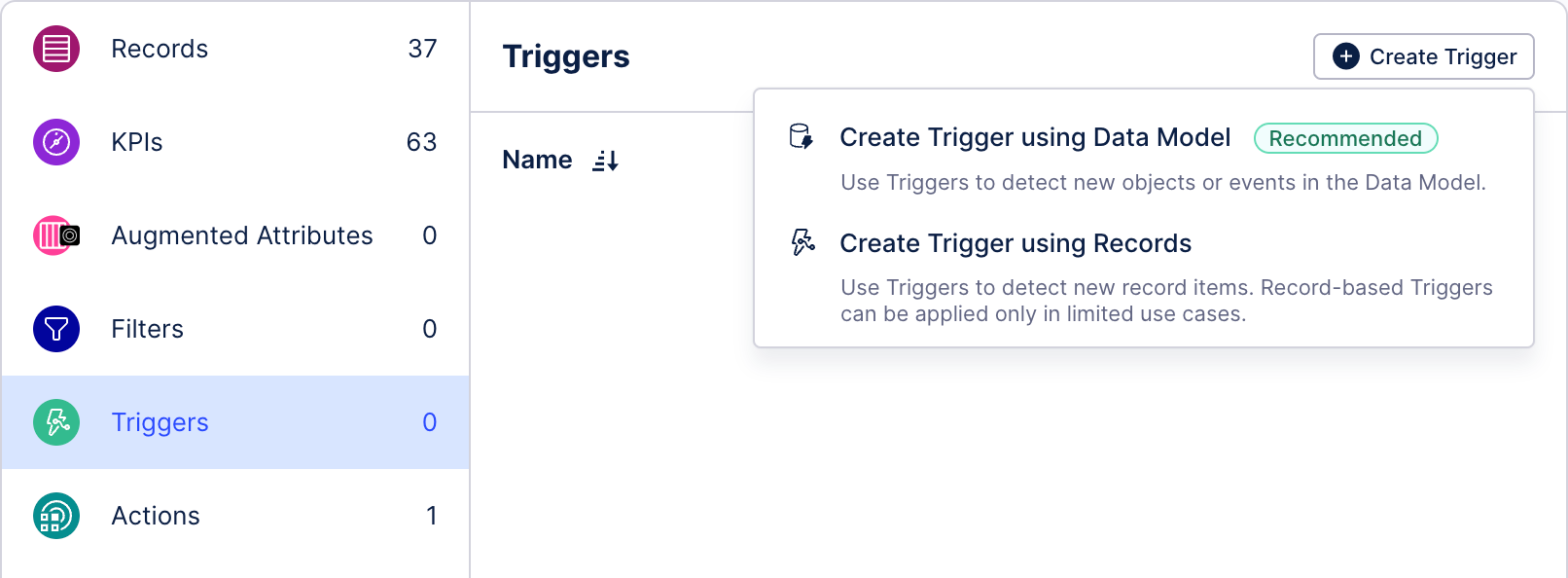
In the upper-right corner, click Create Trigger.
Select Create Trigger using Data Model.
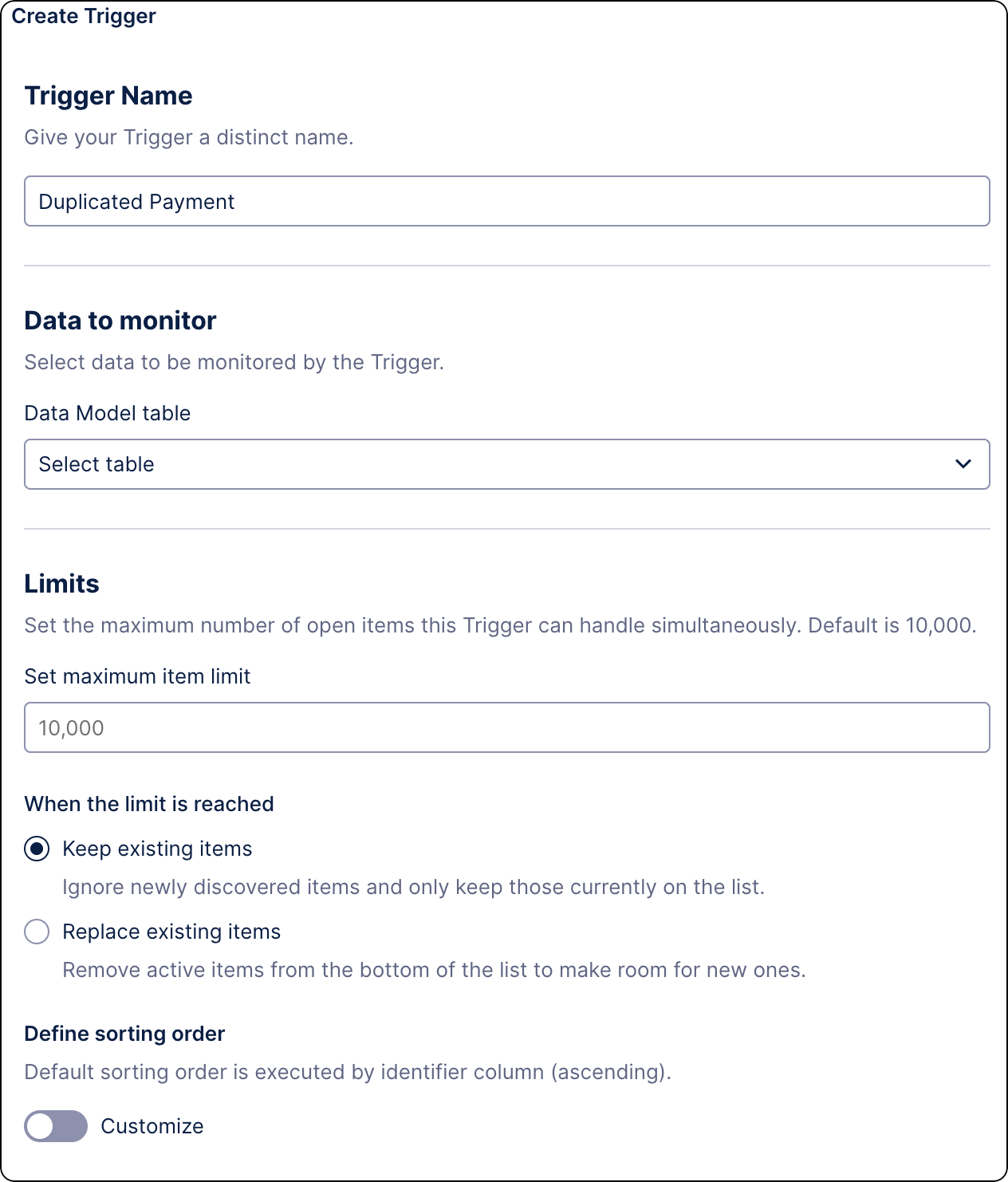
Give your Trigger a name.
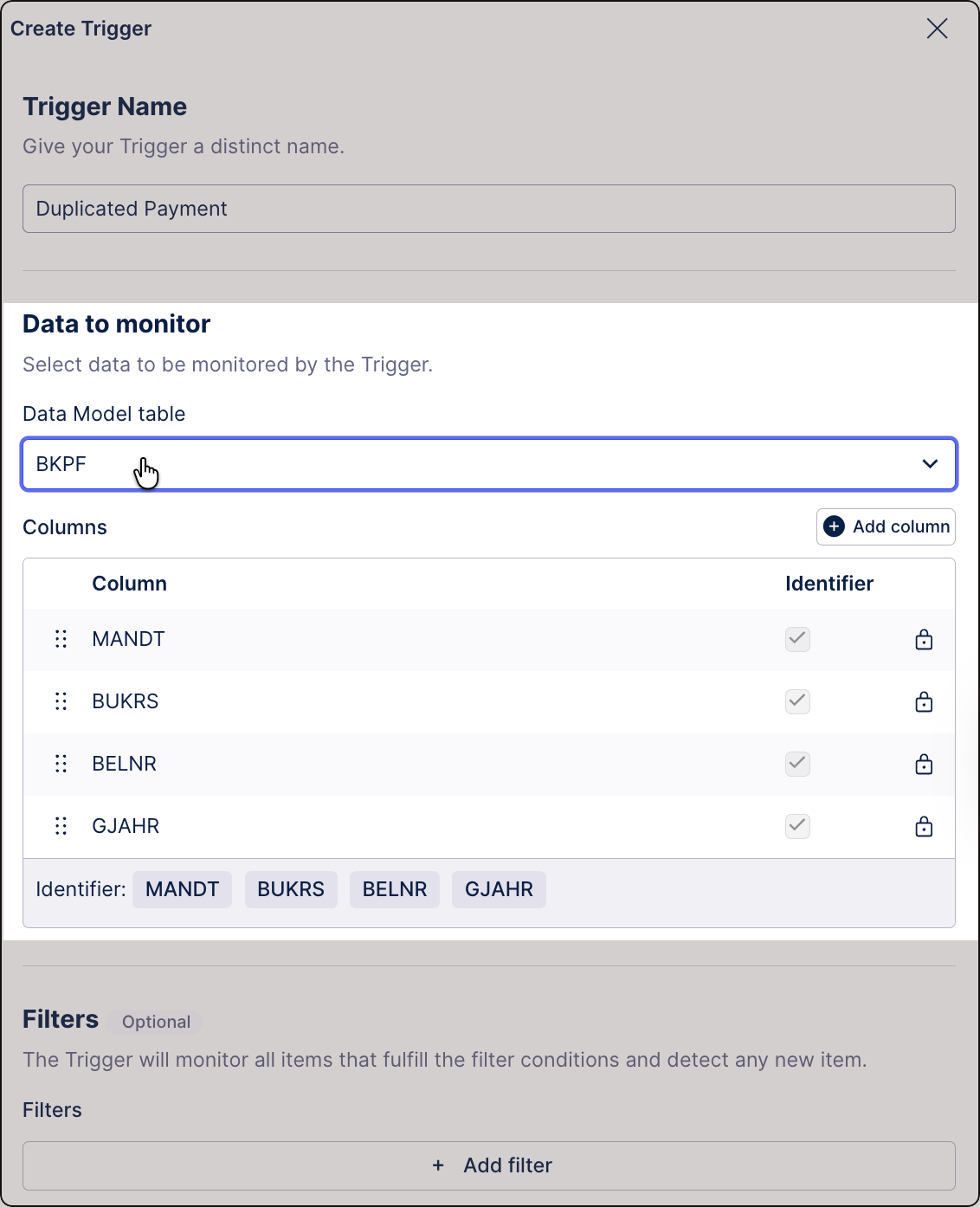
Choose a Data Model table for the Trigger to monitor:
From the drop-down list, select a Data Model table.
A list of columns that make the table identifier shows. Table identifier is made up of a unique selection of columns. The columns that make a table identifier are already preselected and you can’t change them.
(optional) Click Add column to add extra columns for the Trigger to monitor.
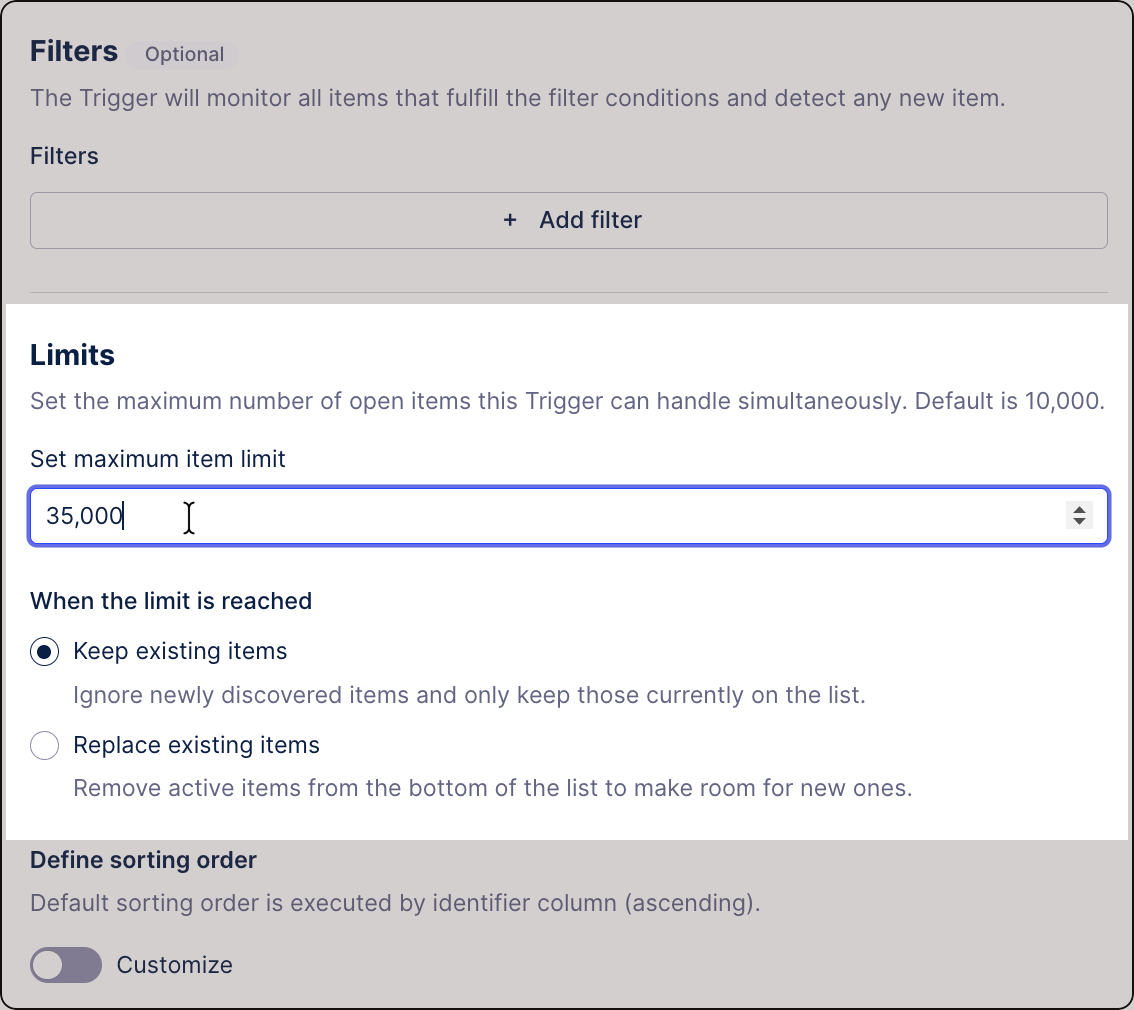
Set the limit for the number of items the Trigger can handle simultaneously.
Provide the maximum item limit.
The default value is 10,000.
Decide how the Trigger should behave when the limit is reached. Select one of the following:
Keep existing items - whenever a new item that meets the triggering criteria is discovered, the Trigger will ignore it and keep items already on the list.
Replace existing items - whenever a new item that meets the triggering criteria is discovered, the Trigger will add it to the monitoring list instead of the last items on the list.
Define the sorting order. Click Customize.
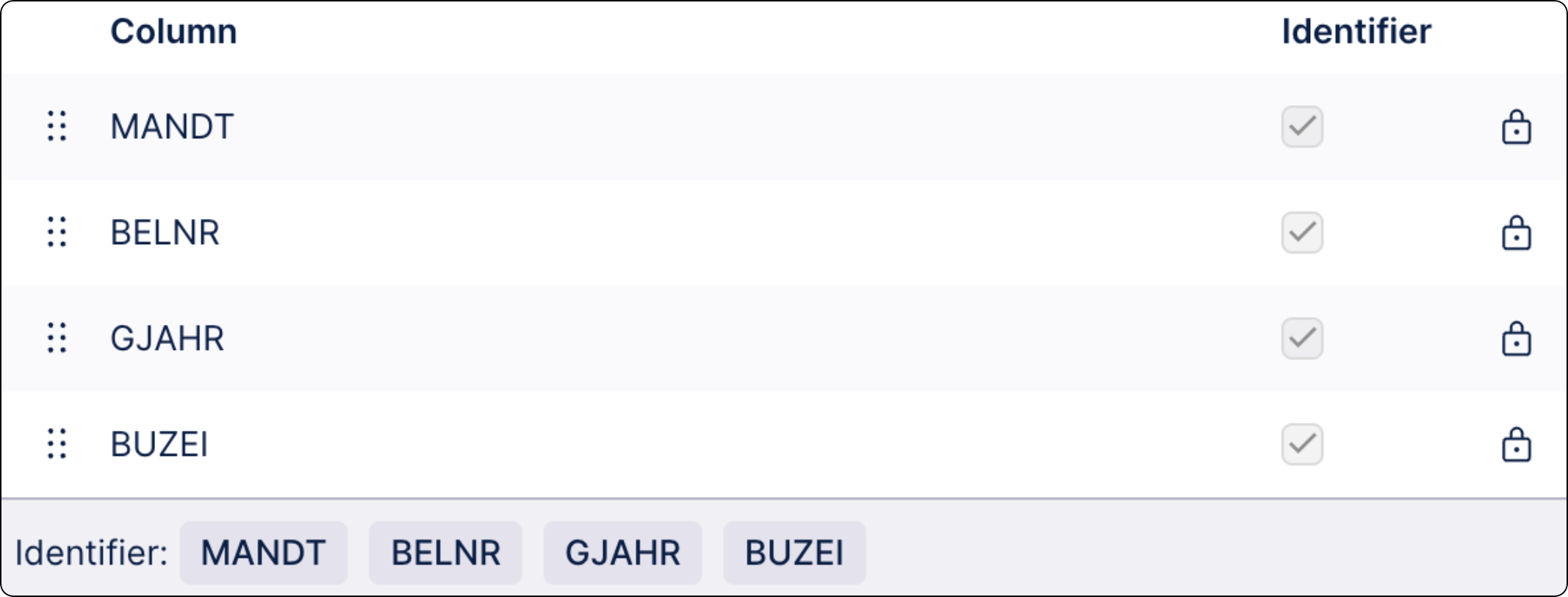
By default, Triggers monitor items in Data Model columns following the ascending order of identifier columns.
Example: In the following example, by default, Trigger will first look at items going through identifier columns in the following order: MANDT, BELNR, GJAHR, BUZEI. You can customize this order by deselecting columns or changing the order to descending.
Click Create.
(optional) Add filters to narrow down the monitoring scope.
You must version and deploy your Knowledge Model for the Trigger to become usable by subscribers.